How to Use AI to Create Product & Blog Content Faster
AI has quickly become part of everyday ecommerce workflows. But for growing brands, the real challenge isn’t whether to use AI. It’s how to use it without losing brand voice, accuracy, or strategic direction.
At Your eCommerce Team, we approach AI as a way to support real expertise. Used correctly, AI helps us generate ideas faster, organize content more efficiently, and repurpose strong messaging across channels. Used incorrectly, it produces generic content that blends in and does little to drive results.
Here’s how we actually use AI for ecommerce content creation to speed up product and blog workflows, while keeping strategy, clarity, and conversion at the center.
Where AI Fits in a Smart Ecommerce Content Workflow
AI works best when it’s helping with:
Idea generation
Content organization
First-pass drafting and editing
Repurposing existing content
Where it falls short is just as important. AI doesn’t understand your customers, your margins, your seasonality, or what differentiates your brand. It can’t decide which topics matter most or how content should support long-term growth.
That’s why every example below reflects a human-led strategy, with AI supporting the execution.
Step 1: Turn FAQs, Reviews, and Customer Questions Into Blog Ideas
Some of the best-performing content ideas come directly from customer questions: emails, DMs, reviews, and FAQs. AI helps us organize those inputs quickly, but the ideas themselves come from real customer behavior.
Real Example: Antoinette Paris

Antoinette Paris – Blog
For Antoinette Paris, we noticed repeated questions from parents around holiday dressing: fit, comfort, age-appropriate styles, and seasonal fabrics. Instead of guessing topics, we used AI to group these recurring questions into clear themes.
That process led to the blog: “How to Choose the Best Christmas Dress for Your Little Girl.”
AI helped:
Cluster similar questions
Identify logical subtopics
Reduce manual brainstorming time
Our team handled:
Final topic selection
Brand-appropriate tone
SEO alignment for seasonal searches
The result felt genuinely helpful because it started with real customer questions rather than trend-driven assumptions.
Step 2: Use AI to Build Blog Structure and Flow
Once a topic is chosen, AI becomes especially useful as an organizer. It helps turn a loose idea into a structured outline, so writers aren’t starting from a blank page.
Real Example: Moment & Co

Moment & Co - Blog
For Moment & Co, we created a seasonal blog focused on Thanksgiving entertaining: “10 Turkey Decoration Ideas for Your Thanksgiving Party.”
AI helped generate an initial outline, suggested section groupings, and supported a logical flow between ideas.
From there, our team refined the section order for readability, product tie-ins that felt natural, and a tone that matched the brand’s playful but polished style.
AI handled the heavy lifting on structure, which gave our team more room to focus on flow, tone, and natural product tie-ins.
Step 3: Use AI to Turn One Idea Into Multiple Formats
One of the biggest time savers is using AI to expand a single idea across multiple formats, without rewriting everything from scratch.
Real Example: From Blog Concept to LinkedIn Content
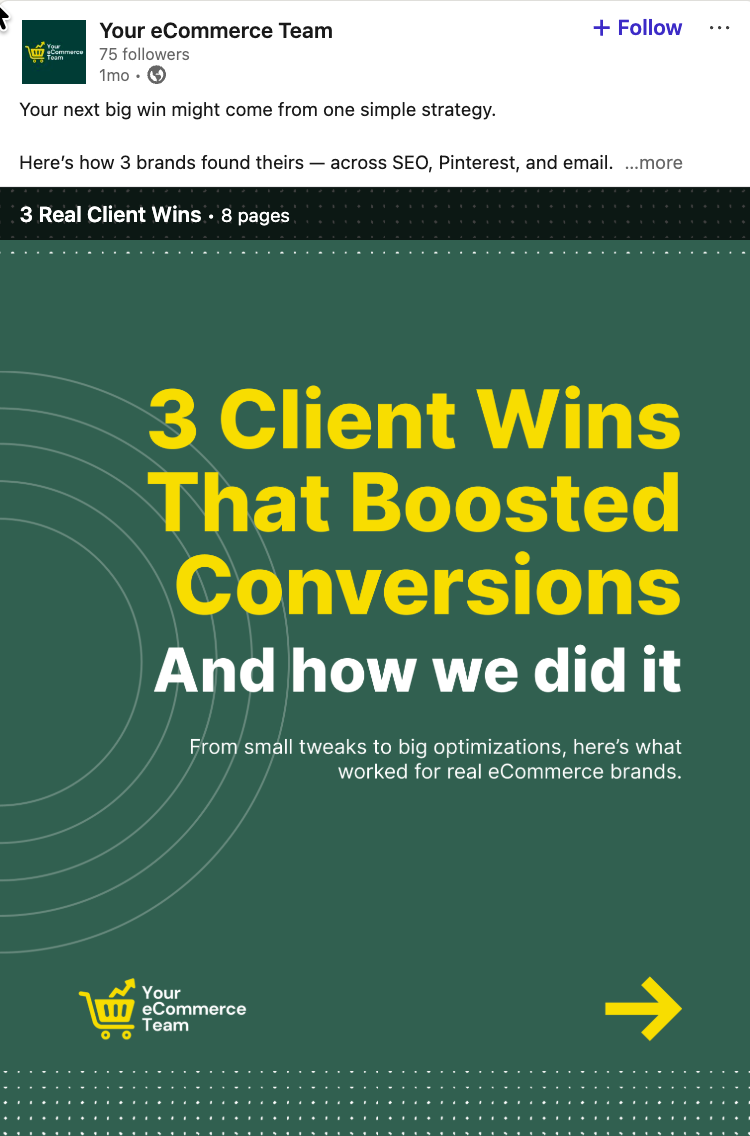
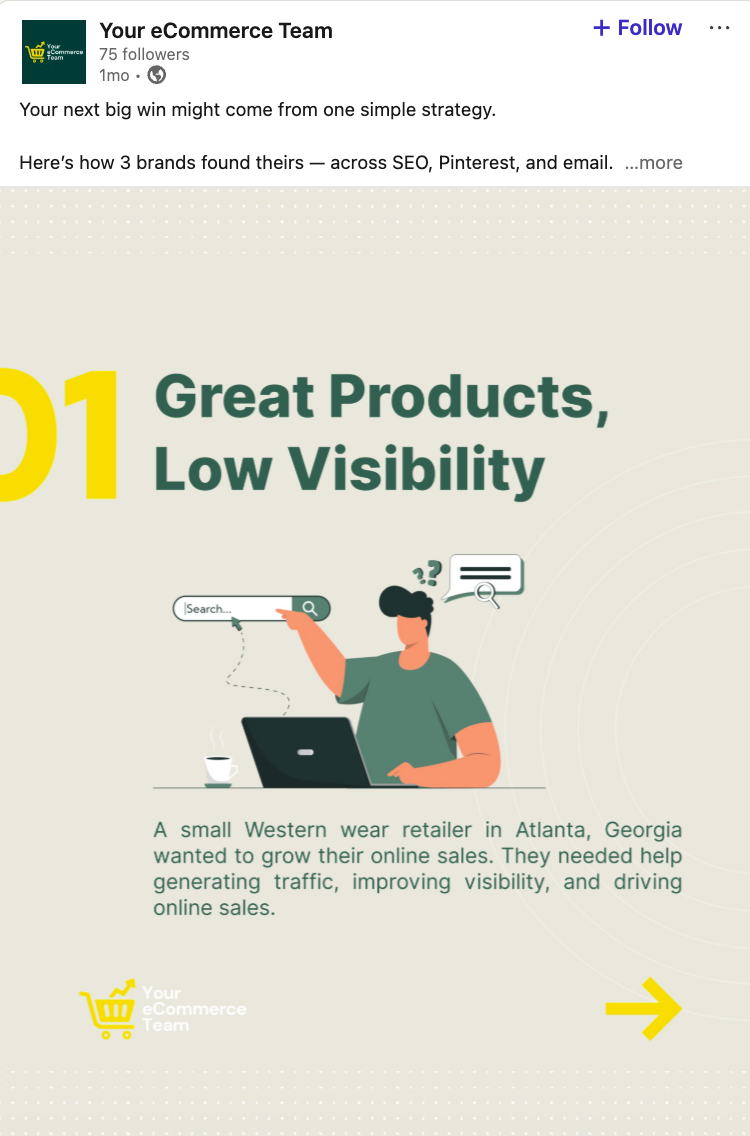
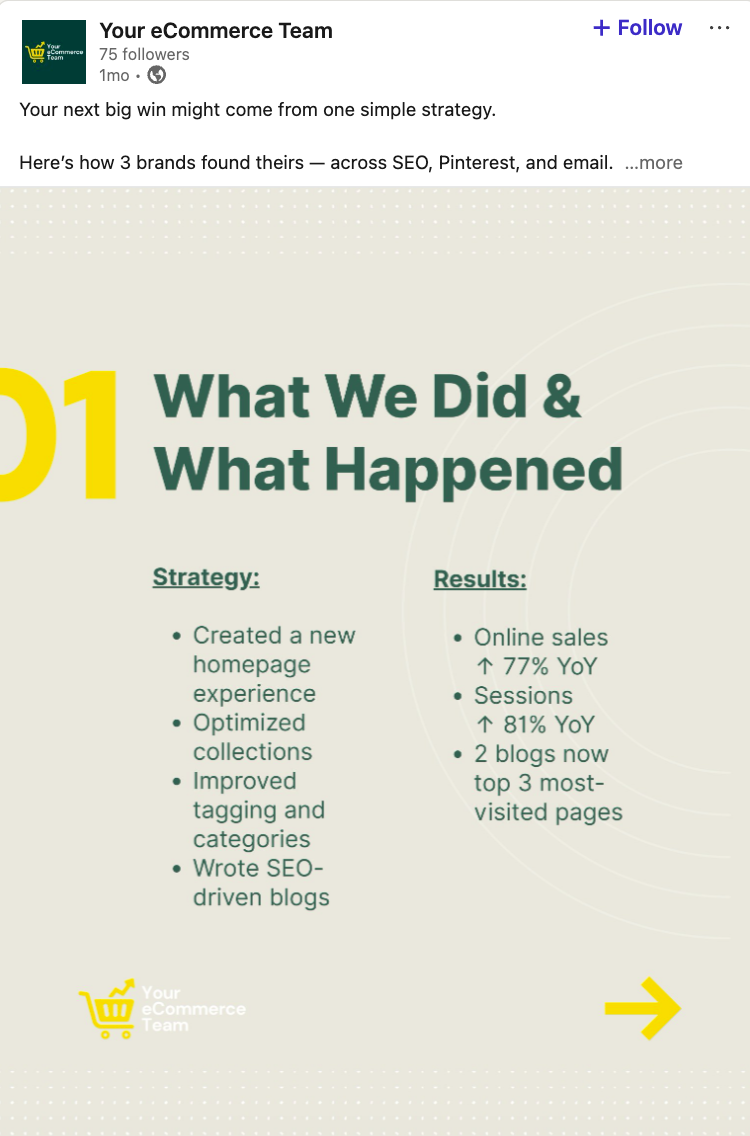
For a recent client wins feature, we started by developing a long-form blog-style concept that outlined results, takeaways, and context. AI helped organize the draft and surface key points. Our team shaped the narrative, refined the positioning, and ensured accuracy.
Once the blog structure was finalized, we then used AI to pull out the strongest insights, condense them into short, skimmable points, and adapt the messaging specifically for LinkedIn.
The LinkedIn post came directly from the blog, not from a separate writing process. AI made the transition between formats faster, while our team ensured accuracy, clear positioning, and consistent brand voice
Step 4: Create a 3-Month Content Calendar in Minutes
Planning is another area where AI adds real value, especially for small teams juggling multiple priorities.
We often use AI to group ideas by season, suggest publishing cadence, and surface gaps in existing plans.
What AI doesn’t do is decide what matters most. Our team still aligns calendars with:
Product launches
Promotional timing
SEO priorities
Business goals
AI accelerates planning. Strategy determines focus.
Step 5: Use AI to Analyze Competitor Content and Find Gaps
AI is also helpful for competitive research, not to copy content, but to understand the landscape faster.
We use AI to:
Summarize competitor blogs
Identify recurring angles
Spot patterns across multiple brands
From there, our team looks for gaps. Which questions aren’t competitors answering clearly? What topics need better explanation? Where can we add real expertise or clearer guidance?
AI surfaces information. Humans decide how to differentiate.
Step 6: Repurpose Existing Copy Into New Angles
AI is especially useful for getting more mileage out of content you already have.
Instead of starting from scratch, it can help refresh older blog posts, turn product descriptions into helpful guides or FAQs, rewrite content for seasonal relevance, or adapt long-form copy for new channels and formats.
The trick is reframing content rather than reinventing it.
Accuracy, brand tone, and customer intent still need human review to ensure the final content feels purposeful, credible, and conversion-ready.
How Your eCommerce Team Uses AI the Right Way
Across blogs, product content, and social, AI is never the decision-maker. It’s the assistant.
We combine AI efficiency with ecommerce expertise to ensure content is:
Strategically planned
SEO-informed
Brand-aligned
Conversion-focused
AI shortens our turnaround time. Strategy ensures the work actually performs.
Conclusion: Faster Content Only Works When It’s Strategic
AI content creation can dramatically speed up your workflow, but speed alone doesn’t drive results. Brands that win use AI to support smart decisions rather than rely on it to replace them.
If you want to create content faster without sacrificing clarity, consistency, or conversion, Your eCommerce Team can help. We blend expert strategy with practical AI workflows so your content works harder across every channel.
Ready to build a smarter content system?
Connect with Your eCommerce Team to get started.
